


Elektronika Ocean Secrets: A Childhood Memory of Soviet Handheld Games
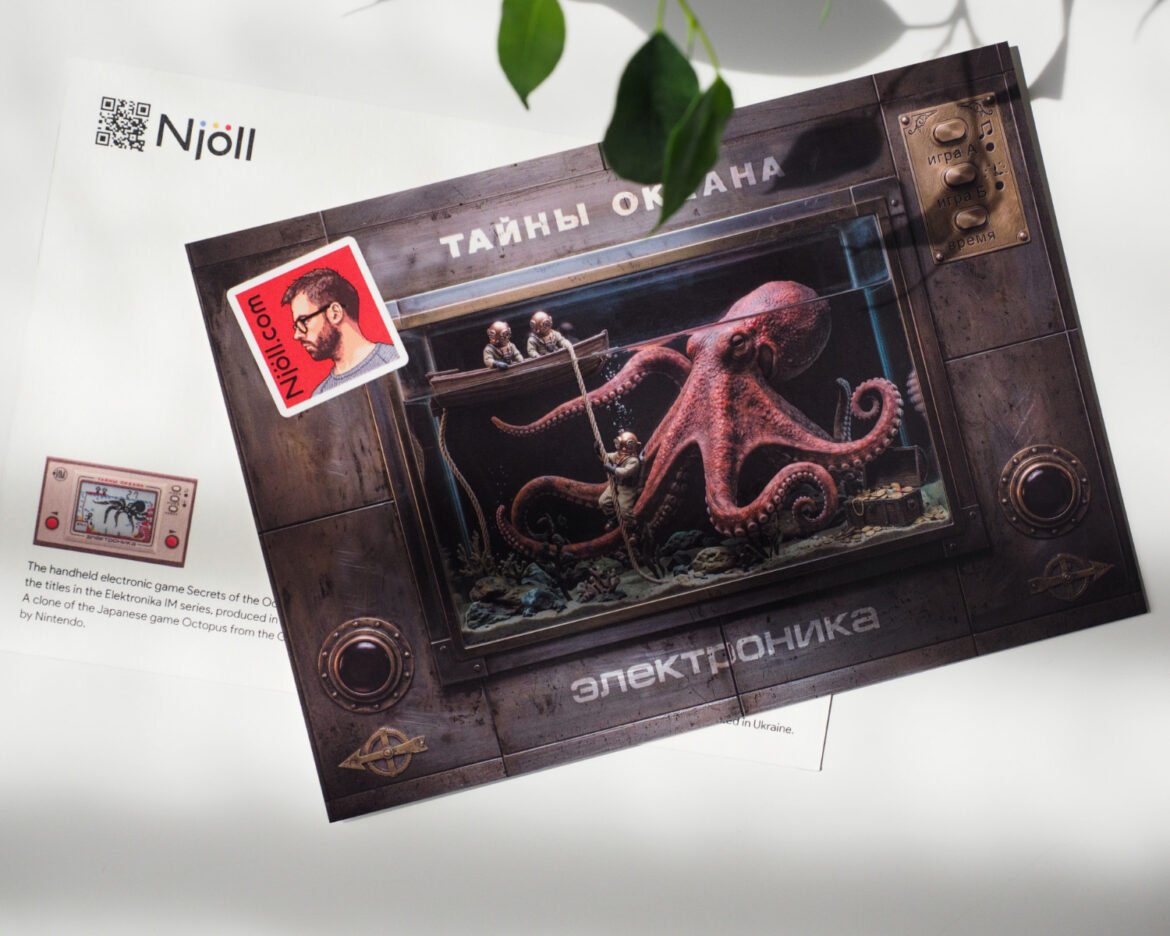
The Soviet electronic handheld game Ocean Secrets (Elektronika brand) was virtually an exact copy of Nintendo’s Japanese Game & Watch: Octopus.
I remember very well how I got this game. I was about ten years old (around 1988) and was lying at home with a high fever. That evening my mother came back from work carrying an orange box with the promising Elektronika logo printed on it. Before that, I had seen the famous Nu, Pogodi! game a couple of times at my classmates’ homes, but I had no idea that a similar game featuring an octopus even existed.
When I took the game out of the box, I was both excited and a little disappointed: it wasn’t the familiar wolf catching eggs in a basket. But it quickly became clear that Ocean Secrets was just as good. The game had a real storyline and its own atmosphere. Instead of simply catching objects, you had to collect treasure from the ocean floor while trying to avoid the tentacles of a giant octopus. It felt as though you could develop your own strategy and improve your skills over time.

I played until late at night and, oddly enough, my fever was gone by morning. Perhaps it was just a coincidence, or perhaps the positive emotions helped.
With a bit of imagination, Ocean Secrets could almost be considered a children’s horror game. A gigantic kraken — although Soviet children would not become familiar with that word until much later, thanks to Western films on VHS — hunts brave divers trying to recover treasure from the seabed. Within just a few LCD screen segments, an entire story unfolded, one that each player completed in their own imagination.
It was this world that the designer of our publishing house tried to recreate on a postcard (with a little help from AI), which we sometimes include with our book on the history of video game consoles in the USSR. In the book itself, readers can learn not only about the history of Ocean Secrets, but also about other games in the Elektronika series that became symbols of childhood for many people who grew up in the 1980s.