


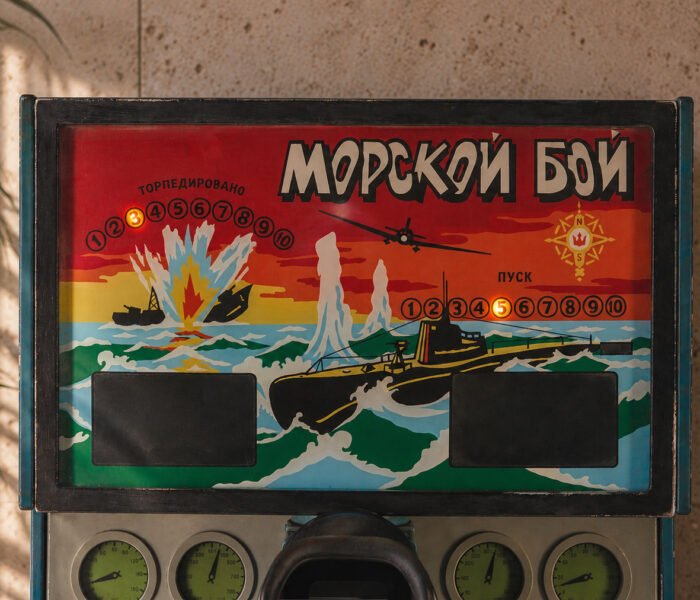
When people think of the Soviet Union, they usually think of Kalashnikov rifles, tanks, space rockets or, at a stretch, Lada cars. Video games hardly seem to belong on that list. And yet the USSR did have a gaming culture of its own — it simply developed very differently from that of the West. Against the backdrop of the Cold War and limited access to Western electronics, an unusual gaming ecosystem emerged. Arcade machines were produced mainly by defense-industry factories, games were written even for programmable calculators, and radio amateurs and engineers spent years squeezing everything they could out of the Soviet equivalent of the Intel 8080 processor, long after it was already becoming obsolete in the West. At the same time, radically different solutions could exist alongside it — such as the affordable 16-bit BK-0010 home computer, based on the architecture of the American PDP-11 minicomputer. Software was freely copied and passed from hand to hand, while local games were often written by schoolchildren themselves, staying behind in computer labs after classes. As a result, the Soviet history of video games and home computers did not develop simply as a belated copy of the Western one, but followed its own, often rather unexpected path. The twelve platforms in this article trace that journey — from the electromechanical Morskoi Boi (Sea Battle) to the Pentium era in the post-Soviet countries.
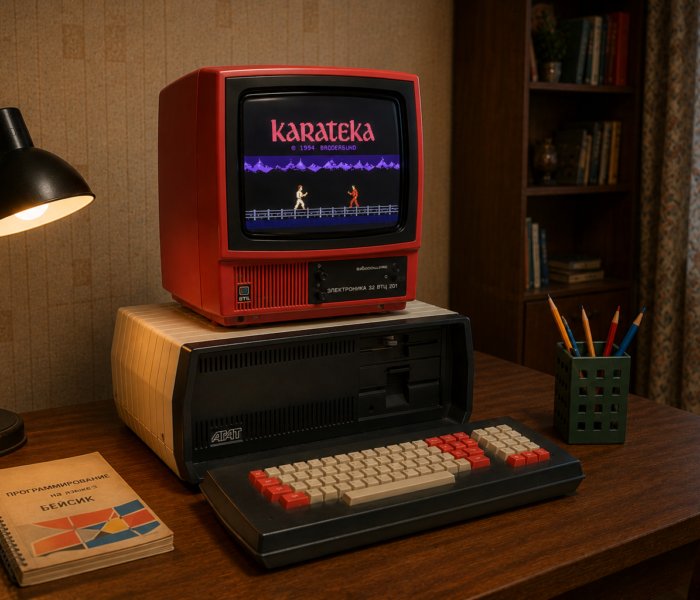
Following the release of our first two books — Soviet Arcade Machines and Game Consoles in the USSR — we are continuing work on the next volumes in our series dedicated to the history of gaming in the Soviet Union.
We are currently preparing three new books:
- Soviet Personal Computers of the 1980s
- IBM PC-Compatible Computers
- ZX Spectrum Clones
Today we’d like to share the preliminary table of contents for Computers of the 1980s.
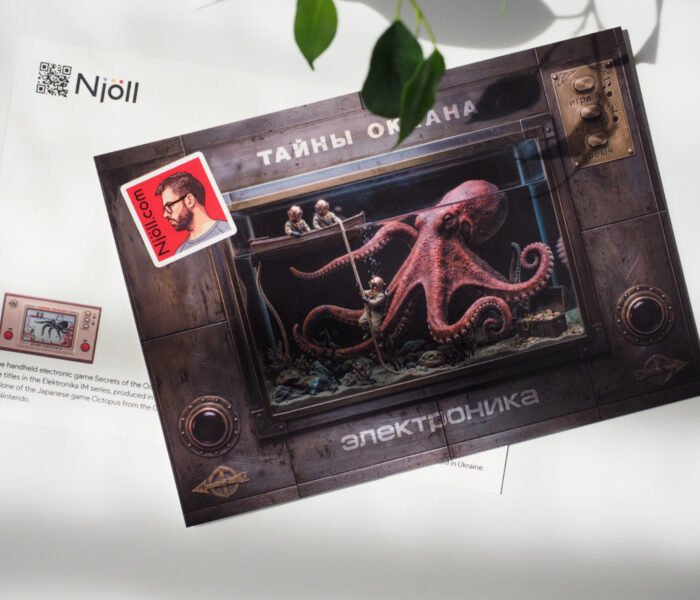
The Soviet electronic handheld game Ocean Secrets (Elektronika brand) was virtually an exact copy of Nintendo’s Japanese Game & Watch: Octopus.
I remember very well how I got this game. I was about ten years old (around 1988) and was lying at home with a high fever. That evening my mother came back from work carrying an orange box with the promising Elektronika logo printed on it. Before that, I had seen the famous Nu, Pogodi! game a couple of times at my classmates’ homes, but I had no idea that a similar game featuring an octopus even existed.
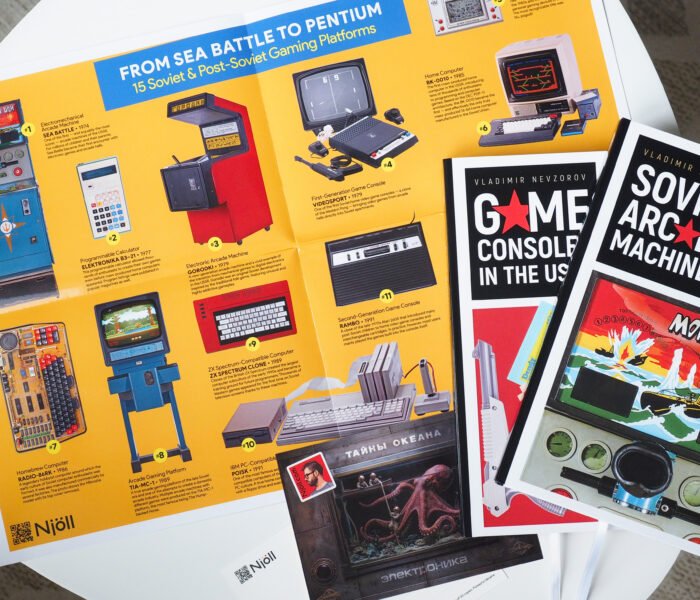
Njoll has released two books dedicated to the history of video gaming in the USSR — one covering arcade machines and the other video game consoles.
These books are the result of more than ten years of research. The texts are based primarily on interviews with developers and the memories of gamers from that era. Both volumes are illustrated with original studio photographs of the machines and consoles, and many images reveal their internal hardware and construction.
The books explore the development of the video game industry behind the Iron Curtain, from the first electromechanical arcade machines to home gaming systems that became familiar to millions of users across the USSR and Eastern Europe.
Attention is given not only to the machines and the games themselves, but also to everyday life in the 1970s, 1980s, and 1990s.
Detailed information about the books, sample photographs, tables of contents, and ordering options can be found in the Shop section.
Customers who order both volumes will receive a complimentary poster featuring 15 of the most popular gaming platforms in the USSR and the post-Soviet region. Be quick — the poster is limited to just 50 copies.
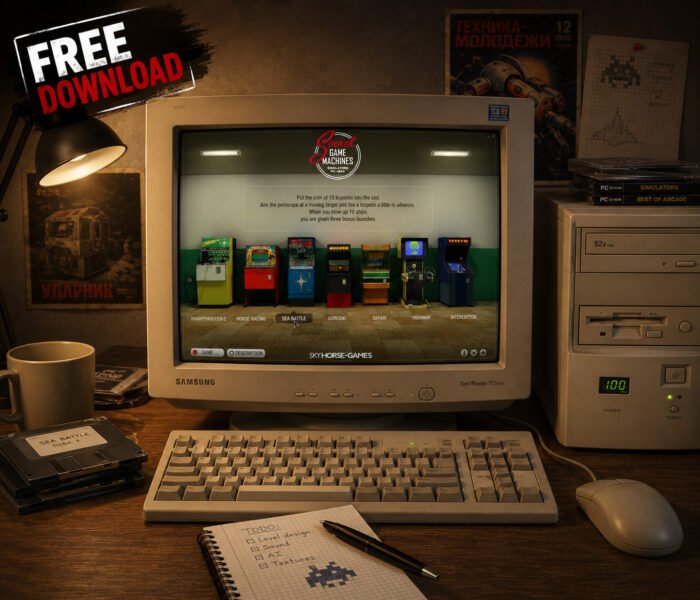
Dear friends! Many years ago, in 2009, when Njoll did not yet exist but our Kyiv-based publishing house Sky Horse was already operating, we released a CD with the computer simulator Soviet Game Machines. Today, this game can be downloaded for free here: https://bit.ly/SovietGameMachines