

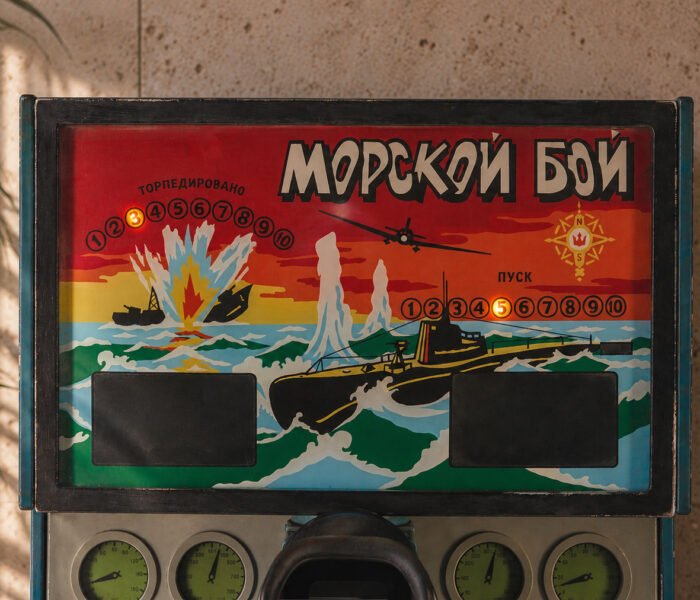
When people think of the Soviet Union, they usually think of Kalashnikov rifles, tanks, space rockets or, at a stretch, Lada cars. Video games hardly seem to belong on that list. And yet the USSR did have a gaming culture of its own — it simply developed very differently from that of the West. Against the backdrop of the Cold War and limited access to Western electronics, an unusual gaming ecosystem emerged. Arcade machines were produced mainly by defense-industry factories, games were written even for programmable calculators, and radio amateurs and engineers spent years squeezing everything they could out of the Soviet equivalent of the Intel 8080 processor, long after it was already becoming obsolete in the West. At the same time, radically different solutions could exist alongside it — such as the affordable 16-bit BK-0010 home computer, based on the architecture of the American PDP-11 minicomputer. Software was freely copied and passed from hand to hand, while local games were often written by schoolchildren themselves, staying behind in computer labs after classes. As a result, the Soviet history of video games and home computers did not develop simply as a belated copy of the Western one, but followed its own, often rather unexpected path. The twelve platforms in this article trace that journey — from the electromechanical Morskoi Boi (Sea Battle) to the Pentium era in the post-Soviet countries.
